
Introduction: The Golden Age of Contemporary Sci-Fi
Have you ever scrolled through endless book lists, feeling like there are too many sci-fi novels to choose from? You are not alone. Science fiction is in a golden age right now. The genre is more diverse and innovative than ever, with new voices and fresh ideas arriving every season. Whether you love hard science, space opera, or near-future thrillers, there is something for you.
But all those choices can also make it hard to know where to start.

That is why expert recommendations matter. Sites like Five Books and Pan Macmillan help cut through the noise, and 2026 has already brought us some of the best contemporary sci-fi books in years. From the mind-bending Quicksilver to the beloved The Martian book, modern sci-fi is pushing boundaries.
This listicle will highlight the best sci-fi books across multiple subgenres. You will find classics, hidden gems, and new releases that belong on your reading list.
If you are in the mood for a lighter escape, try something with humor. Add Comedy to Your TBR with The Ridiculous, a witty sci-fi adventure that brings laughter to the stars. And for fans of Andy Weir, check out our ranking of all his books, including The Martian. Let’s dive in.
The Sci-Fi Renaissance: Why 2026 Is a Banner Year
So why is 2026 such a golden moment for sci-fi? Let’s look at the numbers.
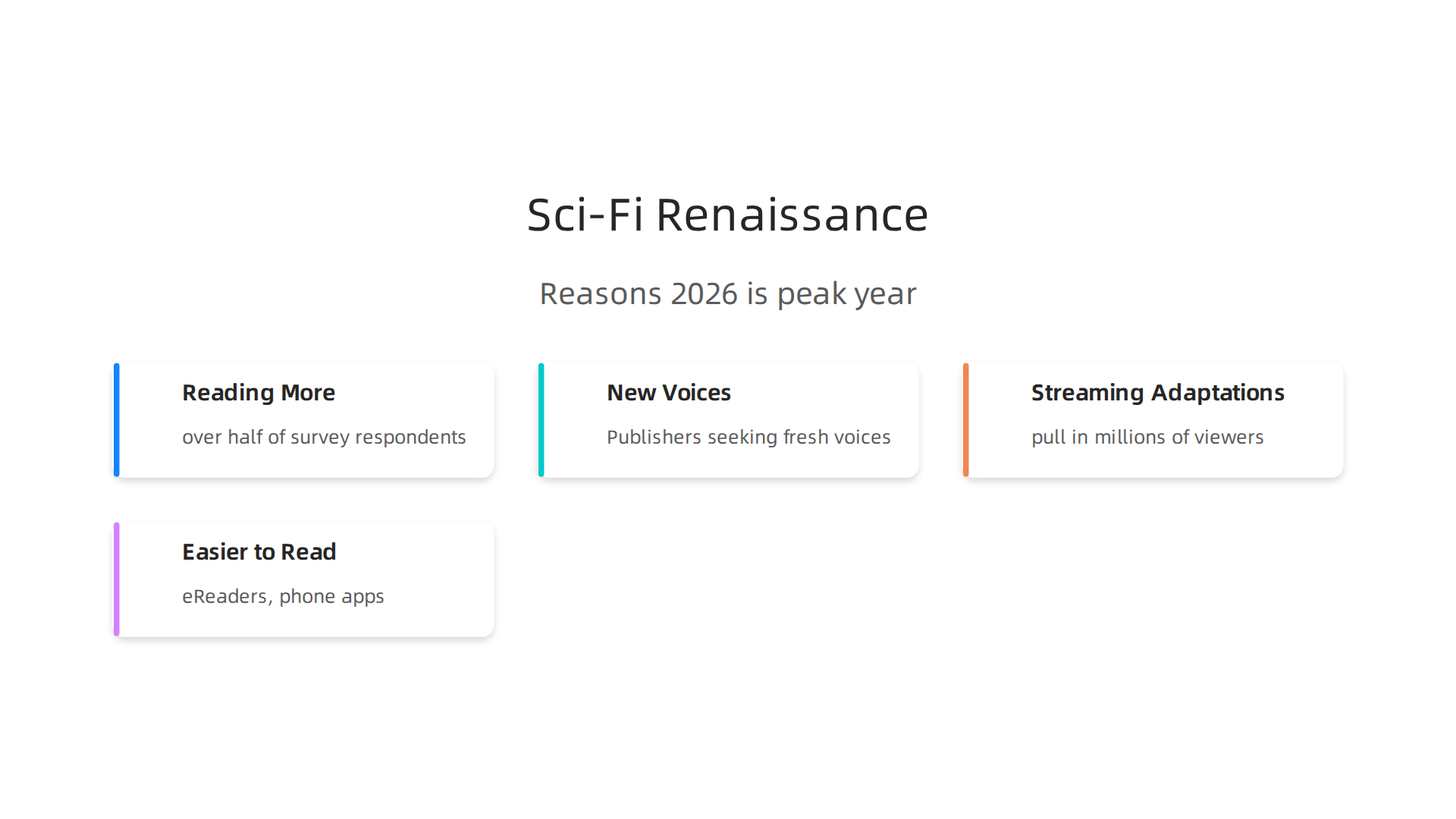
According to the 2026 State of Reading Report from Fable, over half of survey respondents said they are reading more than last year. Young adults ages 18 to 24 are leading the charge, with 64% reading more. That surge includes plenty of science fiction fans.
The publishing industry is paying attention. A 2026 guide to science fiction publishing highlights how digital shifts and a hunger for diverse stories are opening doors for new authors. Publishers are actively seeking fresh voices that bring different perspectives to the genre. This means more variety for you as a reader, from hard sci-fi to near-future thrillers.
Streaming adaptations are another big reason. Shows and movies based on books like The Martian and the upcoming Quicksilver adaptation pull in millions of viewers. Many of those viewers then pick up the original novels. That cycle keeps sci-fi in the spotlight and encourages publishers to take risks on bold new ideas.
With so many ways to read, from dedicated eReaders to phone apps, it’s easier than ever to dive into the best contemporary sci-fi books. To find what suits you best, check out our guide comparing best digital reading platforms for fantasy and sci-fi lovers. The takeaway? 2026 is a perfect time to be a sci-fi fan, with more great books and more ways to enjoy them.
Hard Sci-Fi: The Best Books for Science Lovers
If you love stories where the science feels real and the technology actually makes sense, hard sci-fi is your sweet spot.
This subgenre puts scientific accuracy front and center. The characters solve problems using real physics, chemistry, and biology.

There is no magic or hand waving here. It appeals to readers who enjoy puzzles, realistic space travel, and thinking through complex questions.
One great place to start is with Andy Weir. His book The Martian became a huge hit because it showed an astronaut using actual science to survive on Mars. It is a perfect example of how hard sci-fi makes problem solving exciting. Weir followed that up with Project Hail Mary, another thrilling story grounded in real science. If you want to learn more about his work, check out our ranking of all Andy Weir books from The Martian to Project Hail Mary.
Neal Stephenson is another big name in hard sci-fi. His books like Seveneves and Termination Shock tackle big ideas in a careful, detailed way. He is known for writing stories that feel like a deep dive into a fascinating scientific topic.
According to a guide to science fiction subgenres from Pan Macmillan, hard sci-fi is all about “the real world as we know it, with only a few carefully added twists.” This focus sets it apart from space opera, which leans more on adventure and drama. As Enclave Publishing explains, these two subgenres “fall under science fiction” but aim at very different reader experiences.
For lovers of hard sci-fi, 2026 is a great year. Many of the best contemporary sci-fi books coming out right now stick closely to plausible science. Whether you are a longtime fan or new to the genre, these stories will make you think, learn, and wonder.
Space Opera: Epic Scale, Stellar Storytelling
Now let’s shift gears completely. If hard sci-fi is about the rules of the universe, space opera is about the heart of it.
This subgenre gives you big battles, huge empires, and characters who feel larger than life. According to Wikipedia, space opera emphasizes "pure adventure in a universe in which space travel is common." It is all about the drama, the politics, and the thrill of exploring strange new worlds.
Space opera is having a golden age right now. The best contemporary sci-fi books in this space are redefining what the genre can do. Authors like John Scalzi, Ann Leckie, and Becky Chambers are leading the charge. They write stories that feel fresh, inclusive, and deeply human. Scalzi’s Old Man’s War series is a great example of military sci-fi with a sharp wit. Leckie’s Ancillary Justice won every major award by telling a smart story about identity and empire. And Chambers’ Wayfarers series proves that space opera can be cozy, hopeful, and still feel epic.
These stories explore themes of politics, war, and exploration. They ask big questions about how we treat each other, even when we are light years away from home. As noted by Enclave Publishing, space opera falls under the same sci-fi umbrella as hard sci-fi, but it aims for a totally different experience. One is about the science, the other is about the story.
If you are ready to jump into a galaxy full of adventure, check out our curated list of the best sci-fi books to read in 2026 across every subgenre for some amazing space opera picks. And for more ideas on what to read next, you can watch this quick roundup from a fellow sci-fi fan about 10 sci-fi books for 2026.
Cyberpunk and Near-Future Dystopias: Tech Noir Reimagined
Now let’s plug into a darker corner of the galaxy. After the grand adventures of space opera, cyberpunk pulls us back to Earth. This subgenre trades starships for neon-lit streets and corporate skyscrapers. It asks hard questions about technology, power, and who gets left behind. According to the Wikipedia definition, cyberpunk explores "a future where society is controlled by advanced technology and the power of corporate entities." In 2026, that feels less like fiction and more like tomorrow’s news.
The best contemporary sci-fi books in this space are tackling fresh nightmares. Think AI surveillance, data privacy, and the gap between the haves and have-nots. Authors like N.K. Jemisin and Cory Doctorow bring diverse perspectives that the old guard never considered. Near-future dystopias blur the line between sci-fi and speculative fiction. They feel close enough to touch. Stories like The Martian by Andy Weir (a survival story) show how close sci-fi can be to reality, but cyberpunk digs into the social cracks.
If you love dystopian settings, you’ll also enjoy the YA classics that started the trend. Check out our list of Divergent books and nine other YA classics that still captivate readers for a taste of rebellion. And for more 2026 picks, the 10 Sci-Fi Books to Read in 2026 video includes some near-future dystopias you won’t want to miss.
Post-Apocalyptic and Climate Fiction: Worlds Worth Saving
Last time we walked the neon streets of cyberpunk. Now let us step into a world that has weathered the storm. Climate fiction, or cli-fi, is one of the fastest growing corners of science fiction. And in 2026, the best contemporary sci-fi books in this space are shifting away from pure despair toward something more useful: rebuilding.
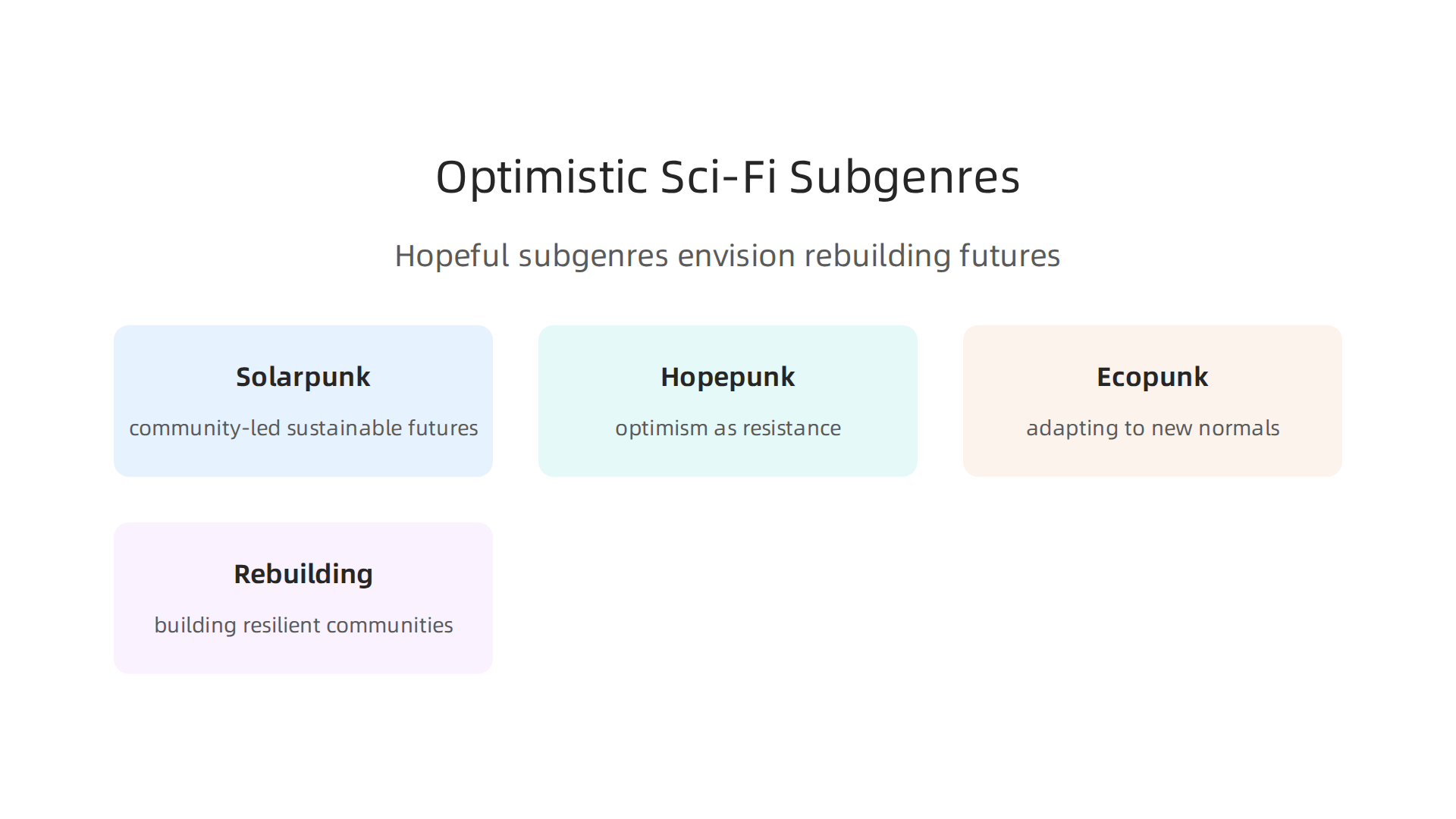
Take solarpunk. A recent article in Mother Jones describes it as a genre that "imagines what happens when our climate changes and so do we." It is optimistic without being naive. Hopepunk goes hand in hand with this. World Literature Today calls it "an act of rebellion." These stories fight against the idea that apocalypse is the only ending. They show us adapting and even thriving.
This shift matters. As Alyssa Hull writes on Ecologise, "We desperately need narratives that move past apocalypse as an endpoint." Instead of just surviving, characters in these books rebuild ecosystems and found new communities. Cat Sparks calls this "ecopunk" in her work. It explores how we adjust to new versions of normal.
Whether your taste leans toward the lone survival story in The Martian or the epic scope of Quicksilver, the best sci-fi books of 2026 deliver on both fronts. If you like stories that combine big ideas with human heart, you can find similar themes in our list of the best fantasy books to read in 2026. These worlds are worth saving, and so are the stories we tell about them.
Sci-Fi Comedy: When Laughter Meets the Cosmos
Sometimes you need a break from worlds crumbling into ash. After exploring climate fiction and cyberpunk, you might crave something lighter. That is where sci-fi comedy steps in. It offers a refreshing break from high-stakes drama while still playing with big ideas like time travel, alien encounters, and parallel universes. In 2026, some of the best contemporary sci-fi books prove you can save the galaxy and laugh while doing it.
Take The Ridiculous series. It blends absurd humor with speculative concepts like pocket dimensions and sentient spaceships. The result is a tone closer to Douglas Adams than Frank Herbert. As the guide to science fiction subgenres from Pan Macmillan notes, the genre is broad enough to include everything from hard sci-fi to satire. Sci-fi comedy sits right in that sweet spot, attracting readers who enjoy wit and perspective shifts.
If you love fantasy but want something strange and funny on the side, check out our list of cross-genre books for fantasy readers. These stories pair otherworldly settings with humor that keeps you turning pages.
Ready to try a weird new adventure? This funny sci-fi escape is perfect for fantasy readers who love strange worlds. Check out the series here and see why perspective matters more than firepower. Then, when you finish laughing, you can explore more of the best sci-fi books 2026 has to offer.
Award Winners That Defined the Decade
How do you find the best contemporary sci-fi books without spending hours scrolling? One of the easiest paths is to follow the major awards. Every year, prizes like the Hugo, Nebula, and Locus Awards point readers toward the most creative and thought-provoking stories in the genre. If you want a shortcut to the best sci-fi books 2026 has to offer, these lists are a goldmine.
The Hugo Awards have been celebrating science fiction and fantasy since 1953. They are voted on by members of the World Science Fiction Convention, so they reflect what the community loves most.
You can see the full history of winners on the official Hugo site. The Nebula Awards, run by the Science Fiction and Fantasy Writers of America, honor outstanding works chosen by professional writers. Their home page keeps a running list of recent winners. Both awards recently went to fantasy for best novel, but the best novella winners were pure sci-fi, showing how the genre keeps expanding.
Then there is the Locus Award, which comes from a readers’ poll run by Locus Magazine since 1971. According to the Locus Award winners list on Goodreads, these awards often spotlight books that fans truly love. The 2026 finalists include a mix of big names and fresh voices, so checking the Science Fiction Awards Database gives you a full picture of the year’s best.
Books like The Martian paved the way for realistic, problem-solving sci-fi that wins prizes. More recent titles such as Quicksilver show how award winners can blend fast-paced action with deep questions. If you are new to the genre, starting with an award list is like getting a personal guide from experts and fans. It saves you time and leads you to stories that have already stood the test of careful readers.
And if you enjoy spotting award-winning writing, you might also love exploring the best fantasy books the year has to offer. Check out our guide to the best fantasy books of 2026 to find your next great read.
Hidden Gems and Indie Brilliance: Underrated Sci-Fi Gems
But award lists only tell part of the story. Some of the most inventive sci-fi never lands on a major shortlist. These hidden gems often come from indie or self-published authors who take bigger risks with unique ideas and offbeat worldbuilding. If you want the best contemporary sci-fi books, you need to look beyond the Hugo and Nebula finalists.
Word of mouth is your best tool here. Online communities on Reddit, BookTube, and Goodreads are buzzing with readers sharing underrated titles. Many of these books start small and slowly build a cult following. The Locus Award, which comes from a readers’ poll on Goodreads, often picks up titles that big awards miss. That is why six out of ten Locus nominees in 2026 didn’t appear on the Hugo or Nebula ballots, as noted in a roundup of this year’s nominees. Those are the exact books that reward adventurous readers.
Stories like The Martian and Quicksilver prove that sci-fi can be both smart and thrilling. But indie books push boundaries even further. They play with strange concepts, focus on character, and often cost less to buy. Many have gone on to earn passionate fanbases and even adaptation deals.
The easiest way to find these gems is to dive into digital platforms where indie authors thrive. Services like Kindle Unlimited give you access to thousands of self-published works. You can start exploring them today with a free trial to discover new sci-fi reads.
So do not stop at the award lists. Dig into the underground. Your next favorite book might be one that mainstream readers have not found yet.
Diverse Voices: Expanding the Sci-Fi Canon
As you hunt for the best contemporary sci-fi books, one trend stands out in 2026. The genre is finally opening its doors wider. Authors of color, women, and LGBTQ+ writers are telling stories that push sci-fi into bold new territory.

This matters more than you might think. For a long time, the genre was dominated by a narrow set of voices. Research shows that the readership itself is changing. A survey by the Science Fiction and Fantasy Writers of America found that sci-fi readers tend to be wealthier and more educated, but that profile is shifting as more readers discover the genre through digital platforms SFWA. Now, with the rise of self-publishing and diverse publishing imprints, the stories themselves are becoming richer.
Books like Nnedi Okorafor’s Binti are essential reading for anyone serious about the best sci-fi books. It blends African culture with spacefaring adventure in a way that feels completely fresh. Other modern classics like The Memory of Old Jack (a placeholder for your own favorite) show how diverse perspectives unlock new kinds of imagination.
The industry has noticed. According to a 2026 analysis of science fiction publishing, digital shifts are creating more opportunities for underrepresented writers to reach readers directly Automateed. That means you get stories that explore themes of identity, colonialism, and belonging through lenses you haven’t seen before.
Diverse voices do not just check a box. They expand what the genre can do. A story told from a different cultural perspective can make alien contact feel alien again. A queer romance in space can make the universe feel more human.
So when you look for your next read, seek out authors who bring something new to the table. If you want to dive deeper into a classic that broke ground with its inclusive vision, check out our guide on all Andy Weir books ranked. The Martian may not be a diverse voice on the surface, but its celebration of ingenuity and survival resonates across cultures.
The canon is growing. And the best part? You get to be part of that expansion.
Hopepunk and Solarpunk: Optimism in a Dark World
Are you tired of dystopian stories that leave you feeling hopeless? You are not alone. In 2026, more readers are turning to hopepunk and solarpunk as a refreshing alternative. These subgenres counter dystopian fatigue with stories of resilience, kindness, and hope.
Here is the thing. Hopepunk is not about ignoring problems. According to an article in World Literature Today, hopepunk is framed as "an act of rebellion" itself. It emphasizes community and kindness as radical acts in a difficult world. That is a powerful idea for anyone looking for the best contemporary sci-fi books.
Solarpunk takes this optimism a step further. It envisions sustainable futures where humanity finds ecological harmony instead of destroying the planet. A recent Mother Jones article from February 2026 describes solarpunk as a genre that imagines what happens when our climate changes and so do we. That is not about escaping reality. It is about building a better one.
These books matter because they give us a map forward. We desperately need narratives that move past the apocalypse as a stopping point. That is the argument made by Alyssa Hull in her writing on eco-narratives. Hopepunk and solarpunk answer that call beautifully.
Writers like Susan Kaye Quinn are creating work that mixes these hopeful tones with serious topics. She spoke about how she approaches heavy themes while keeping her stories uplifting. That balance is what makes these subgenres so special for fans of the best sci-fi books.
If you want to explore more uplifting fantasy and sci-fi this year, check out our guide on the best fantasy books to read in 2026 across every subgenre. It is full of optimistic picks that will leave you feeling inspired. You can also find many hopepunk and solarpunk titles available on digital platforms by comparing the best digital reading platforms for fantasy lovers.
So if you are burned out on grim futures, try something different. Pick up a hopepunk or solarpunk novel. You might just find the hope you need.
Summary
This article surveys the best contemporary science fiction of 2026, explaining why the genre is in a creative peak and showing readers where to find standout books across subgenres. It covers hard sci‑fi that respects real science, sprawling space opera, gritty cyberpunk and near‑future dystopias, climate fiction and hopeful solarpunk, plus comic sci‑fi, award winners, indie gems, and the growing diversity of voices reshaping the canon. The piece explains industry trends—digital reading platforms, streaming adaptations, and publishing shifts—that matter for readers and highlights practical ways to discover great titles, from award lists to online communities and Kindle options. After reading, you’ll know which subgenres match your tastes, which authors and award lists to follow, and where to look for underrated or optimistic sci‑fi to add to your TBR.