
Introduction
You have probably heard of Dan Brown. His thriller The Da Vinci Code sold more than 80 million copies worldwide. It was translated into about 40 languages according to Britannica. But here is the thing. Even with all that fame, many new readers still get confused about the correct reading order.
Some people think you should start with Angels & Demons. Others say you can skip straight to the big bestseller. The truth is a bit more complicated. Even fantasy readers who love big series like the Wheel of Time series or books by Robin Hobb can benefit from a clear guide. If you have ever searched for a cj box books in order or emily henry books, you know how helpful a proper reading list can be. In fact, we have a similar guide for Sarah J Maas reading order that many readers find useful.
In this article, we give you a complete list of dan brown books in order. We answer common questions and help you avoid spoilers. Whether you are a longtime fan or a total newcomer, this guide is for you.
Ready to start reading? Let’s begin with the very first novel. And if you love discovering books in the right order, be sure to Discover Lists for more curated recommendations.
Complete Dan Brown Book List in Publication Order
Here is the full list of dan brown books in order as they were published.
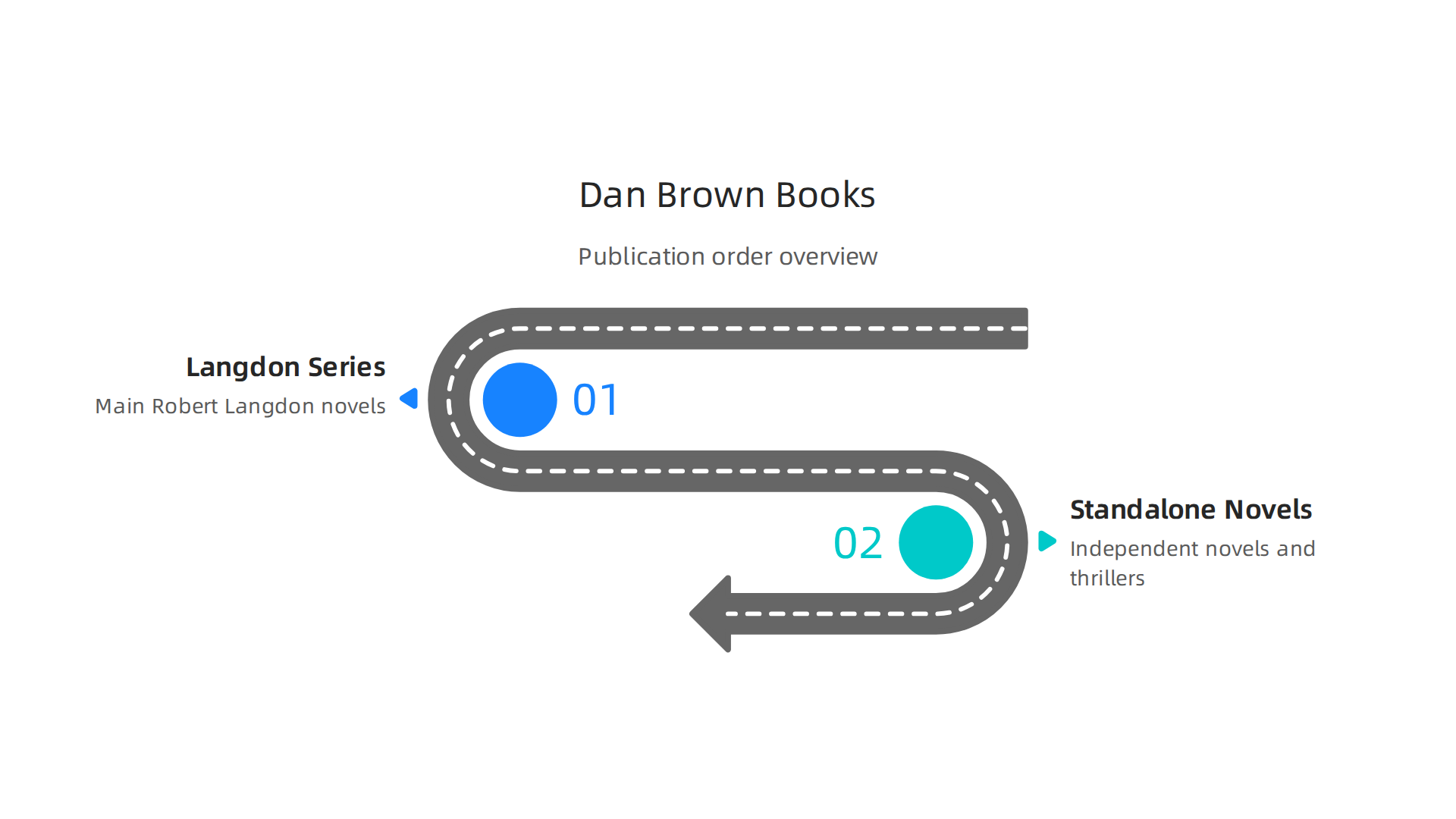
This is the simplest way to read them. You see how the author’s style grows from his early standalone thrillers into the famous Robert Langdon series.
If you are someone who loves structured series like the Wheel of Time series or the deep worldbuilding in Robin Hobb books, you will appreciate knowing exactly where each story fits.
| # | Title | Year | Series | Quick Note |
|---|---|---|---|---|
| 1 | Digital Fortress | 1998 | Standalone | A techno-thriller about code breaking at the NSA. No Langdon yet. |
| 2 | Angels & Demons | 2000 | Robert Langdon #1 | Introduces Harvard symbologist Robert Langdon. Takes place before The Da Vinci Code. |
| 3 | The Da Vinci Code | 2003 | Robert Langdon #2 | The worldwide blockbuster that kicked off the mania. |
| 4 | The Lost Symbol | 2009 | Robert Langdon #3 | Langdon tackles secrets hidden in Washington, D.C. |
| 5 | Inferno | 2013 | Robert Langdon #4 | A race through Florence inspired by Dante’s Inferno. |
| 6 | Origin | 2017 | Robert Langdon #5 | Langdon faces questions about science and religion in Spain. |
| 7 | The Secret of Secrets | 2025 | Robert Langdon #6 | The latest Langdon adventure, published in September 2025. |
This list matches the official release order from Dan Brown’s website and other trusted sources like Book Notification. You can also check the series page on Goodreads to see reader ratings for each book.

If you want to go deeper, note that Angels & Demons was published before The Da Vinci Code even though some later editions list it as a prequel. Reading them in publication order makes the most sense and avoids any confusion.
As of 2026, Dan Brown has eight novels, plus a children’s picture book called Wild Symphony (2020). The new novel, The Secret of Secrets, was announced by Penguin Random House and is now available.
Once you finish these, you might want to check out our guide on the best online bookstores for fantasy books if you prefer buying physical copies or ebooks.
Ready to start reading? Pick up Digital Fortress and see how Dan Brown’s career began. Or jump straight to the Langdon series with Angels & Demons. For more book lists like this one, Discover Lists for curated recommendations across all your favorite genres.
The Robert Langdon Series: Chronological vs Publication Order
So you have the publication list in front of you. But here is something that trips up a lot of new readers. The Robert Langdon series actually has a built in time jump.
Angels & Demons came out in 2000. The Da Vinci Code came out in 2003. But inside the story, Angels & Demons happens first. That makes it a prequel of sorts. Dan Brown wrote it as the start of Langdon’s adventures, even though most people discovered it after the blockbuster success of The Da Vinci Code.
You have two ways to read the series now. Let us look at both.
Publication Order (How the Books Were Released)
This is the order most fans followed. It matches the list you saw above.
- Angels & Demons (2000)
- The Da Vinci Code (2003)
- The Lost Symbol (2009)
- Inferno (2013)
- Origin (2017)
- The Secret of Secrets (2025)
When you read in this order, you experience the series the way the world did. You start with Angels & Demons, which introduces Langdon as a fresh character. Then you jump into the bigger, more famous story. Many readers say this feels natural because you grow with the author’s style. You can check the official novels page on Dan Brown’s website to see this order confirmed.

Chronological Order (Story Timeline Order)
Inside the books, the timeline runs like this:
- The Da Vinci Code (takes place first chronologically, around 2003)
- Angels & Demons (actually a flashback to Langdon’s earlier adventure)
- The Lost Symbol
- Inferno
- Origin
- The Secret of Secrets
Wait, does that mean Angels & Demons is a prequel? Yes, sort of. But Dan Brown wrote it first, so it was not intended as a prequel. The story events of The Da Vinci Code happen before Angels & Demons in the timeline. This is a well known detail among fans. You can see reader discussions on Goodreads where people debate the best approach.
Which One Should You Pick?
Publication order works best if you are a first time reader. You get the gradual build of Langdon’s character and the author’s evolving style. It also avoids confusion about when events happen. Plus, you start with a strong standalone book before diving into the biggest one.
Chronological order can work if you are rereading the series or if you really care about timeline continuity. Some readers prefer to follow the story’s internal clock. But you might find that Angels & Demons feels like a step back after the scale of The Da Vinci Code.
Personally, I recommend publication order for anyone who wants the classic experience. It is the order that made the series famous. If you decide to go that way, you can jump right in.
But if you are still unsure which books match your taste, our curated book lists can help you find similar thrillers, mysteries, or even fantasy series like the Wheel of Time series. You might discover your next favorite author while you decide.
Ready to start reading? Grab Angels & Demons first. That is how the journey began for millions of readers. And if you love puzzle filled adventures, you will be hooked from the first page.
Standalone Novels: Digital Fortress and Deception Point
Now that we have covered the Robert Langdon series, you might be wondering about the other two Dan Brown books.
They are not part of Langdon’s world, but they still carry that same mix of puzzles, science, and fast action. Many readers ask how these fit into the full list of Dan Brown books in order. Let us break them down.
Digital Fortress (1998) was Dan Brown’s first novel. It follows a cryptographer named Susan Fletcher who works for the National Security Agency. She gets caught in a battle over a secret code that could break American intelligence. The story focuses on computers, encryption, and government secrets. There is no Robert Langdon here, but the tension is just as high. You can see this book listed on Dan Brown’s official website along with his other novels.
Deception Point (2001) came out right after Angels & Demons. This one is set in the Arctic. A NASA scientist finds something buried in the ice that could change everything. But soon she realizes the discovery might be a lie. The story blends science, politics, and a chase across frozen terrain. It has a different feel from the Langdon books, but the pacing is similar.
So where do these books belong in your reading journey? Since they do not connect to any series, you can read them at any time. Some people start with Digital Fortress to see how Brown’s style began. Others save them for after the Langdon series as a change of pace. Both work fine. If you want to match the publication order, start with Digital Fortress, then Deception Point, before jumping into Angels & Demons.
If you enjoy the thrill of uncovering secrets, you might also love cross-genre stories that blend mystery and fantasy. Check out our list of cross-genre books for fantasy readers to find more high-stakes adventures. And if you are ready to move beyond Dan Brown, our curated reading lists can guide you to your next obsession.
Ready to explore more? Discover book lists that match your taste, from fast thrillers to deep fantasy worlds. Click below to browse.
Why Series Order Matters for Character Development
Now you know the standalone books. But when it comes to Robert Langdon’s story, the order you read them in makes a real difference. That is because Langdon is not the same person in Angels & Demons and Inferno. He grows. His fears, his relationships, and his understanding of the world all shift across the books.
If you jump into The Da Vinci Code first, you will meet a Langdon who already has a history of solving impossible puzzles. You might wonder why he reacts a certain way or why certain people trust him. Reading the Robert Langdon series in order, as listed on his official series page, fixes that. You see him become the professor we love.
The Penguin Random House guide to Dan Brown books notes how Brown blends art, history, and science with fast action. Part of the magic is that each book layers new information on top of what came before. For example, Langdon’s claustrophobia is introduced in Angels & Demons and it matters again later. If you skip that first book, you miss the setup.
There is also the danger of spoilers. Going out of order can reveal plot twists or character fates that were meant to hit you at a specific moment.
The whole experience feels flatter.
This idea of reading order for character growth applies to many series, not just Dan Brown’s. Think of C.J. Box’s books in order with Joe Pickett. Or the deep character arcs in Robin Hobb’s books. Even romance series like Emily Henry’s books have connections that reward reading in sequence. And for epic fantasy, the Wheel of Time series would be confusing if you jumped around.
If you want to avoid that confusion with other authors, it helps to have a roadmap. Check out our guide on the correct reading order for Sarah J. Maas to see how series order can protect the emotional beats of a story.
Ready to find your next series read in the right order? We have curated lists that help you start at the beginning and enjoy every twist.
Where to Start: A Guide for Fantasy Readers
If you love fantasy, you already know the joy of a richly built world. Dense maps, hidden clues, and puzzles that make you think. Dan Brown writes the same way, but with real cities, real art, and real history. His books feel like exploring a magical kingdom, except everything he describes actually exists. That is part of the thrill.
So where should you start? It depends on what you want most.
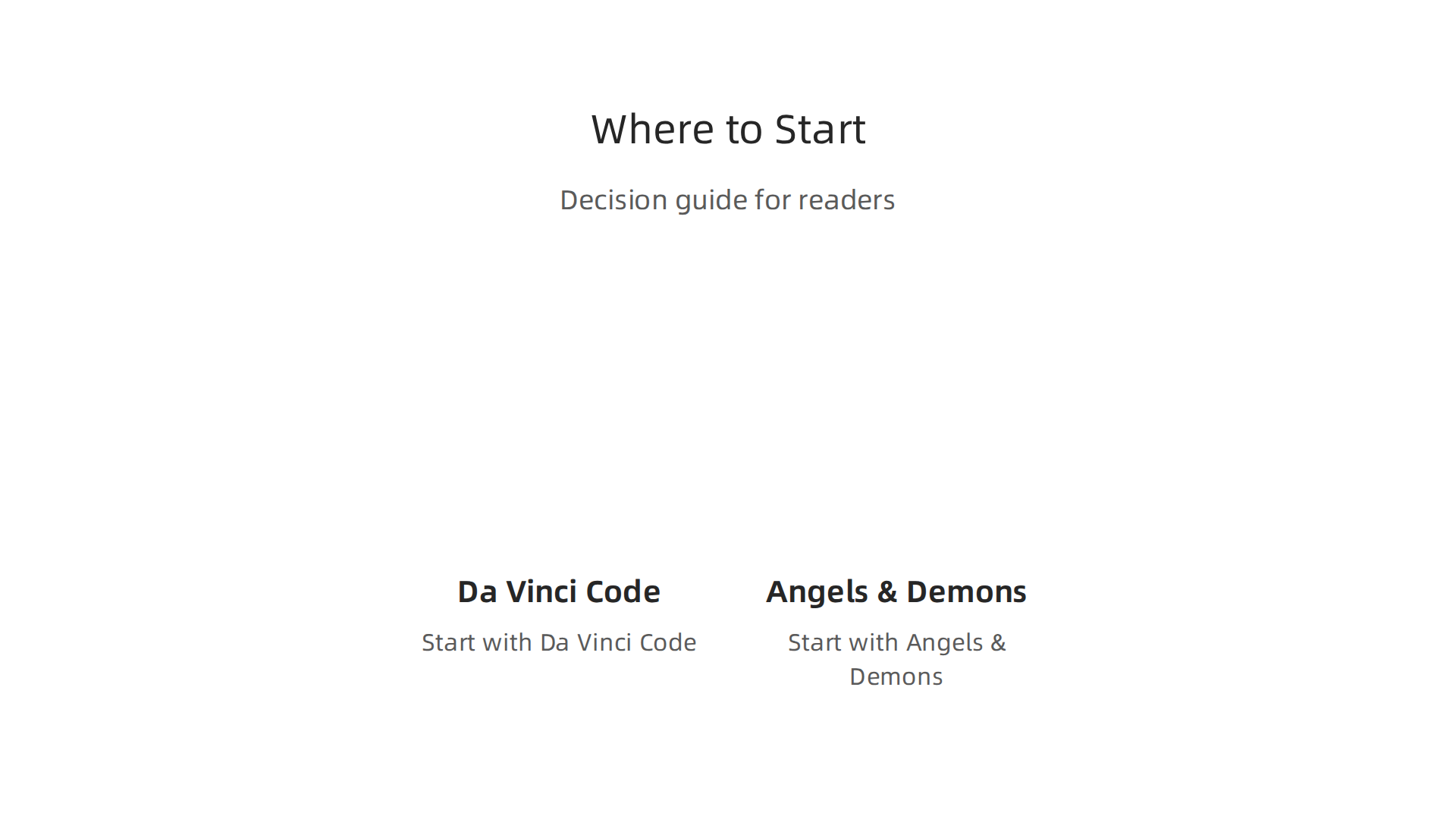
Start with The Da Vinci Code if you want the most famous ride. This is the book that made Dan Brown a household name. It is fast, full of surprises, and throws you straight into the action. According to his official website, it is one of the bestselling novels of all time.

If you love a story that keeps you guessing like a good fantasy mystery, this is your door.
Start with Angels & Demons if you care about seeing the hero grow. This is the first book in the Robert Langdon series. You meet Langdon before he becomes the legend. The pacing is just as fast, and the puzzles are still there. But you get the emotional arc from the beginning. The Goodreads series page lists it as Book 1 for a reason. You will understand his fears and strengths better if you begin here.
Fantasy readers often worry that thrillers feel too simple. That is not the case here. The Penguin Random House guide points out how Brown blends art, history, science, and religion into layers. That density feels familiar to anyone who loves the deep lore of the Wheel of Time series or the intricate plots in Robin Hobb’s books. The difference is that Brown works with our real world. So instead of learning fictional magic rules, you learn real Vatican secrets and Renaissance codes.
Tips for making the switch from fantasy to thriller:
- Expect real-world settings, but let yourself be surprised.
- Focus on the puzzles, not the magic. The mental challenge is similar.
- Read one book first. If you like the pace, go through the dan brown books in order for the full effect.
If you are someone who enjoys mapping out a series before diving in, you might also like planning other authors. For example, knowing the Sarah J Maas reading order can protect you from spoilers and character spoilers. Our guide on that can help you start the right series first.
Ready to find your next great read? We have lists that help fantasy fans like you discover books that hit the same notes. Click to discover lists and browse curated suggestions for your next adventure.
Frequently Asked Questions About Dan Brown Book Order
If you are new to Dan Brown and still wondering about the best reading path, you are not alone. Many fantasy readers ask the same questions before diving in. Let us clear up the most common ones.
Do I really need to read the Robert Langdon books in order?
Not strictly, but it helps. Angels & Demons happens first in the timeline, and The Da Vinci Code comes second. Later books like The Lost Symbol and Inferno build on events and character growth from earlier ones. A good rule of thumb for any mystery series is to start at the beginning. Many readers on forums like LibraryThing agree that reading a series in order gives you a richer experience. You will catch small references and see Robert Langdon evolve.
Is chronological order better than publication order?
For Dan Brown, they are the same. He wrote the books in the order the story happens. So Angels & Demons (2000) leads into The Da Vinci Code (2003), then The Lost Symbol (2009), Inferno (2013), and Origin (2017). No tricky timeline jumps like in some fantasy series. If you love mapping out a series, you might enjoy planning other authors too, like knowing the correct cj box books in order if you ever want to try a different thriller author.
Can I read The Da Vinci Code first even if it is Book 2?
Yes. It works as a standalone novel. Dan Brown wrote it so new readers could jump in anywhere. But if you read it first, you will miss the introduction of Langdon and some backstory. The choice is yours. Many fantasy readers are used to starting in the middle of a wheel of time series, so jumping in is not a big deal.
Are any of the books truly standalone?
All of them are, technically. Each novel has a complete mystery that wraps up by the end. You will not be left on a cliffhanger. But characters reappear, and personal arcs continue. If you are the kind of reader who loves tracking character growth across multiple books, like with robin hobb books, then reading in order is more satisfying.
Quick reference for indecisive readers:
- Want the biggest thrill fast? Start with The Da Vinci Code.
- Want the full character journey? Start with Angels & Demons.
- Want to sample one without commitment? Pick any book that sounds good. They all stand alone.
Still not sure what to read next? Sometimes a change of genre helps. If you are looking for something completely different but still exciting, check out our list of cross-genre books for fantasy readers featuring Frieda McFadden. It might give you a fresh starting point.
Ready for your next adventure? Browse curated lists and get personalized suggestions from our team. Discover Lists and find books that match your mood today.
Dan Brown’s Writing Style and Themes Across the Series
Now that you know the best order to read the books, let’s talk about what makes Dan Brown’s writing so addictive.
His style is built for speed. Short chapters, cliffhanger endings, and a constant sense of urgency. Every scene pushes you toward the next revelation.
But the real magic is in his themes. Brown weaves together cryptography, religion, science, and conspiracy in every book. He says in an interview that he sees himself as a student of many religions. That curiosity shows on every page. Symbols, secret codes, and hidden histories are not just decoration. They are the engine of the story.
As you move through the dan brown books in order, you will notice a shift. Early books like Angels & Demons focus on the clash between science and faith. Later ones like Origin explore the future of humanity and technology. The threats get bigger. The puzzles get deeper. Reading in order lets you see how Brown refines his ideas over time.
For fantasy readers, this might feel familiar. The hidden societies and ancient secrets in Brown’s books work like a well built magic system. They have rules, logic, and a hidden layer of reality waiting to be discovered. If you love stories where everything is connected beneath the surface, Brown’s series delivers that same thrill.
Want to explore more series with layered worldbuilding? Check out our guide on different series reading orders to find your next obsession.
Ready for your next great read? Browse our curated lists of fantasy and thrillers that match your taste. Discover Lists
How to Verify Book Order Information Online
So you want to read a series in the right order. Smart move. But the internet is full of old lists and wrong info. How do you know what is correct?
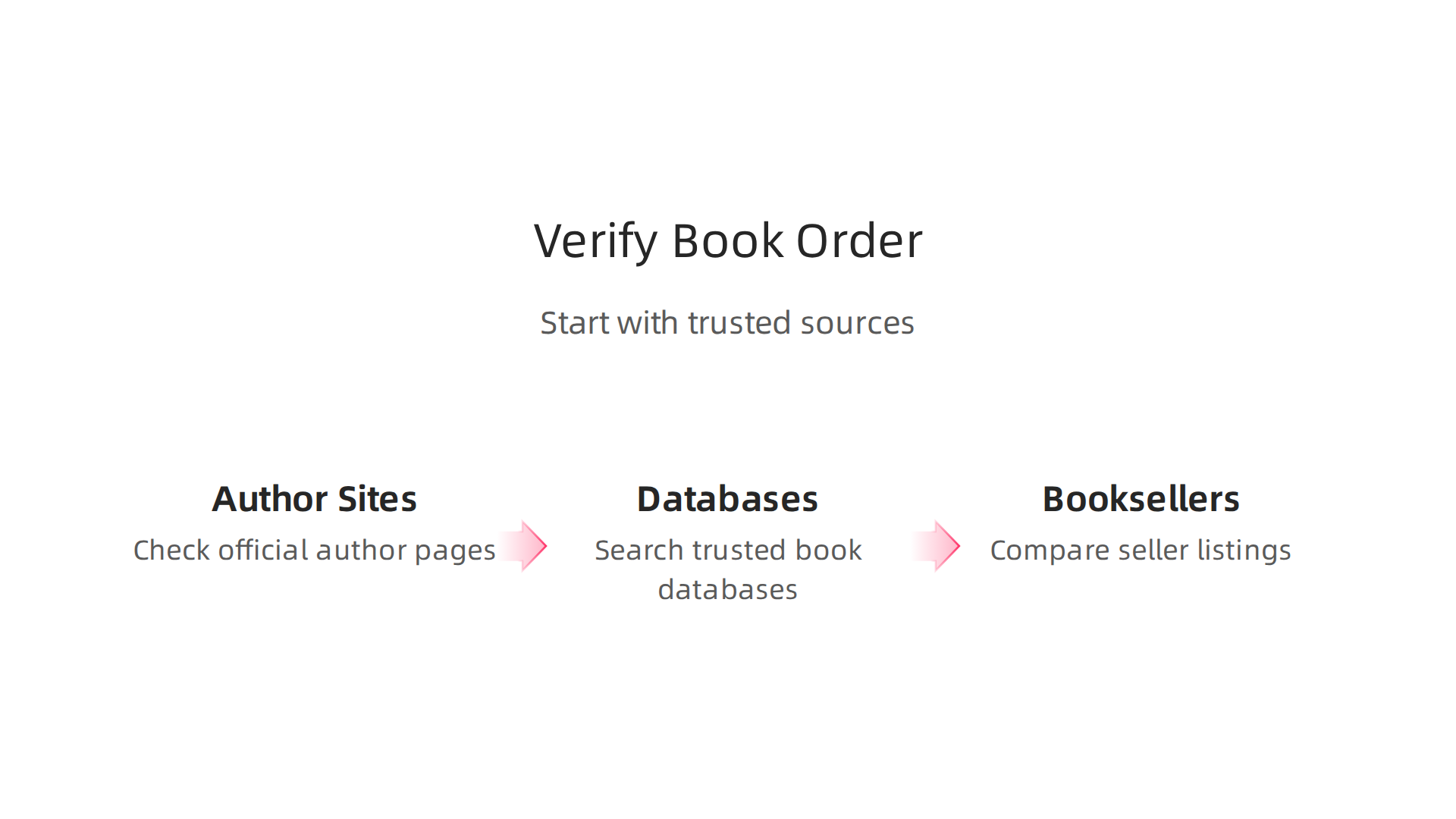
Here is the easy way. Start with the most trusted sources.
1. The author’s official website
This is your best bet. Authors usually list their books in reading order right on their site. If they have a series page, that is gold. For example, if you are looking for dan brown books in order, Brown’s own site will show you the sequence without any guesses.
2. Major book databases
Sites like Goodreads are great because millions of readers help keep the data current. Goodreads has series pages that list books in the correct order. You can also check the Library of Congress guide for finding book reviews, which often points to reliable ordering info. Use these big databases to confirm what the author says.
3. Reputable bookseller sites
Amazon, Barnes & Noble, and similar retailers list books by series order. Look for the "Series" link on a book’s page. It usually shows you the full list. These stores have a financial reason to keep the order right, so they are usually accurate.
How to cross-reference
Do not rely on just one source. Check the author site, then Goodreads, then a bookseller. If all three agree, you are safe. If they disagree, look for the official publisher listing.
Some fan lists get outdated fast. A forum post from 2008 might still be correct, but maybe not. You can see an example of that discussion on LibraryThing. Always verify with a fresh source.
Red flags to avoid
- Lists without dates. If you do not know when it was updated, be careful.
- Old fan wikis. They can be great but sometimes neglect new releases.
- Lists that seem too short. Missing books is a common mistake.
If you follow these steps, you will never start a series on the wrong book again.
Want a curated list of great reads without the guesswork? Check out our book discovery page for hand picked recommendations across fantasy and thrillers.
Summary
This guide gives a complete, reader-friendly list of Dan Brown books in the right order and explains why order matters. It presents the full publication list, clarifies the Robert Langdon series’ publication versus story timeline, and shows where the standalone novels fit. The article explains how reading order influences character development, spoilers, and your reading experience, and it recommends whether to start with Angels & Demons or The Da Vinci Code depending on your goals. It also outlines Brown’s recurring themes and pacing, offers tips for fantasy readers switching to thrillers, and shows simple ways to verify book order online. After reading, you’ll know exactly which book to pick first, how to avoid spoilers, and where to find reliable ordering information.